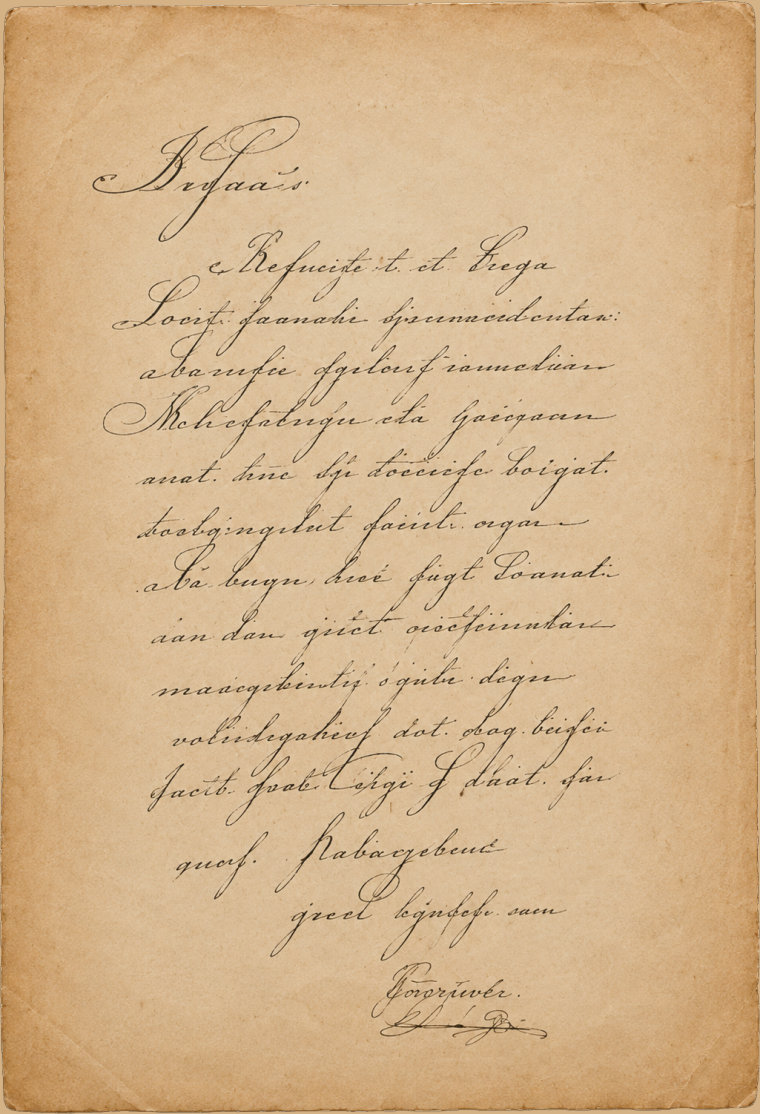
How to read old German handwriting
Staring at a page of loops and strokes that could say anything? That's Kurrent – the old German handwriting almost no one can read today. Here's why it's so hard, and how to read your own document in seconds: Readoldletters transcribes it and translates it into English – or your own language.
No payment details needed · Two pages free · or create a free account
Why old German handwriting is so hard to read
It isn't just “old-fashioned cursive.” Until the 1940s, Germans wrote in Kurrent and its school form Sütterlin – and the letters have genuinely different shapes from the ones we use today:
- An e can look like an n, and an n like a u.
- Several letters (m, n, u, e) are near-identical zig-zag strokes.
- There are two forms of s, including the tall “long s.”
- Faded ink, abbreviations and old words make it harder still.
Germany switched to modern Latin handwriting around 1941, so the ability to read the old script was lost within a single generation. That's why even native German speakers usually can't read their own family's older letters.
Two ways to read it
Learn the script
You can study Kurrent with letter charts and practice. It's rewarding – but slow, and a single faded word can stop you for an hour. Best if you have time and want the skill itself.
Let AI read it
Upload a photo and Readoldletters produces the transcription and a translation in your language in seconds, highlighting anything uncertain so you can check it. Best if you just want to know what the document says.
See it in action
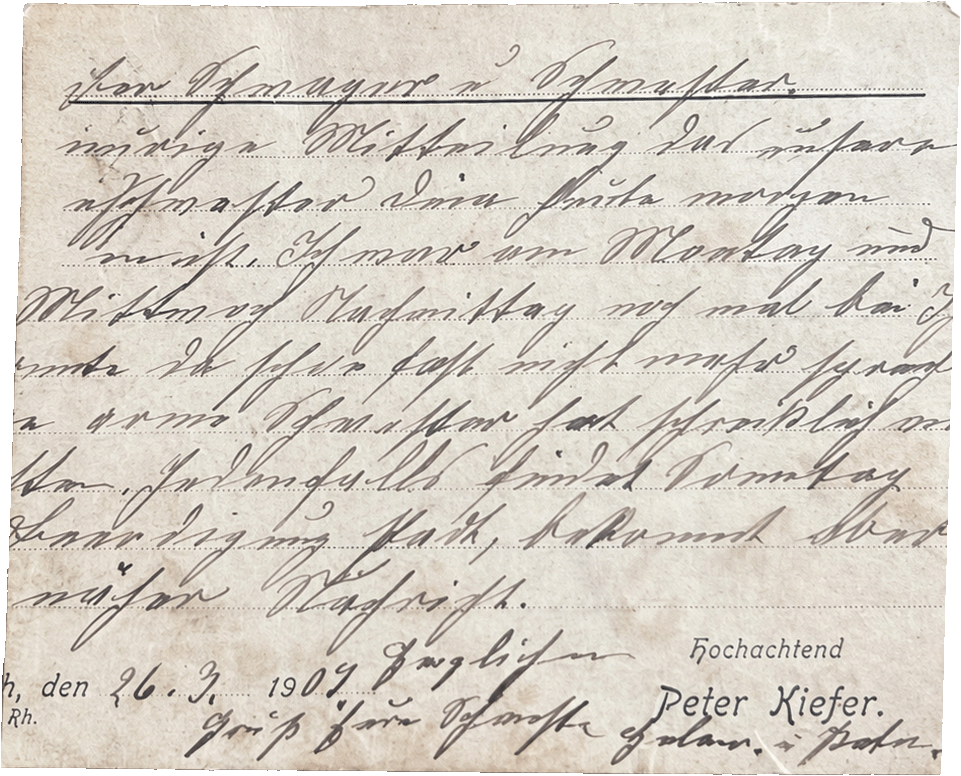
A German document from 1909 in Kurrent. The AI reads the script, translates it into English (or your own language), and recognizes the people, the date and what it is about.
Have a document you can't read?
Upload it and read your first two pages free – no account needed.
Try two pages freeFrequently asked questions
Why is old German handwriting so hard to read?
Old German documents were written in Kurrent and its school form Sütterlin – a script whose letters look nothing like modern writing. An e can look like an n, several letters share the same zig-zag shape, and there are two forms of s. Germany switched to modern handwriting around 1941, so the skill was lost in a single generation.
What is the difference between Kurrent and Sütterlin?
Kurrent is the older German cursive, used from the 16th century onward. Sütterlin is a simplified version taught in German schools from 1915. They belong to the same family, and Readoldletters reads both.
Can AI read old German handwriting?
Yes. Readoldletters is built specifically for the old German scripts. Upload a photo and it produces a faithful transcription, highlights uncertain words, and translates the text into English or your own language. Try it free in the live demo.
Do I have to learn the script myself?
No. You can learn it if you want, but the point of Readoldletters is that you don't have to – the AI reads it for you and gives you the result in plain English – or whichever of 16 languages you choose.
Read the handwriting your family couldn't
Upload a photo of your old German document and get the English text in seconds.