Your ancestors wrote it.
Now you can read it.
Old letters, diaries, church records and certificates – written in a script that is hard to decipher, in a language that is not English. We decipher historical handwriting and translate it into English.
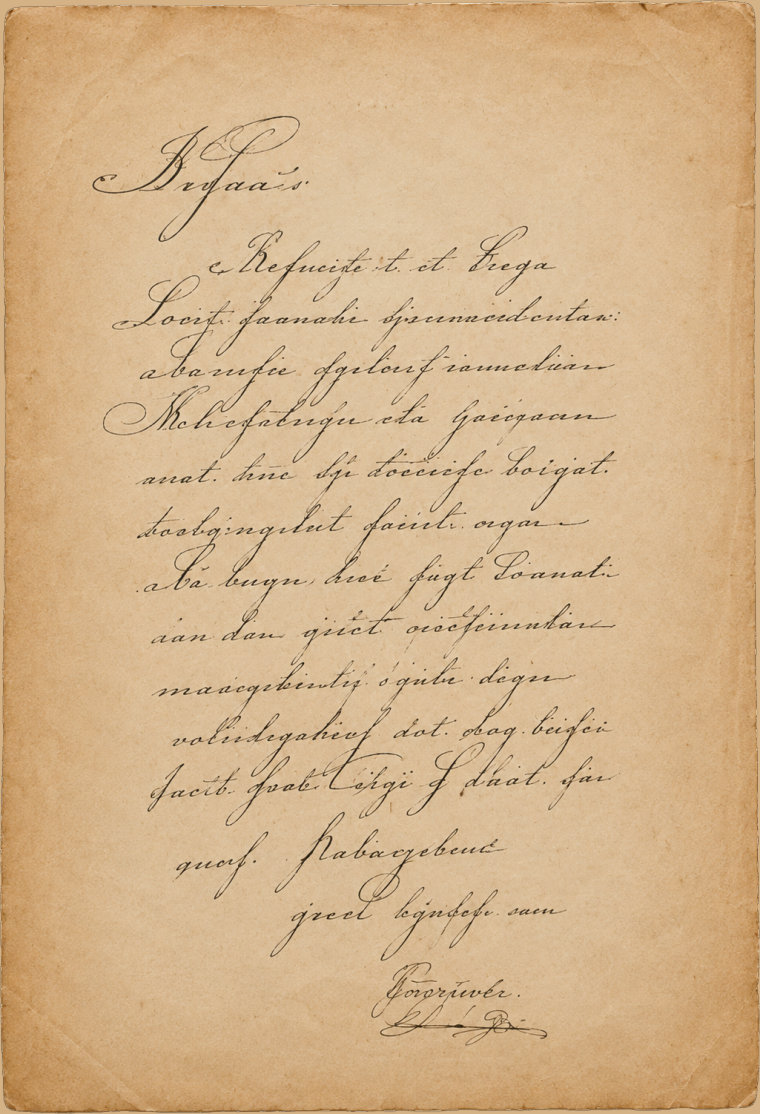
From unreadable handwriting to plain English
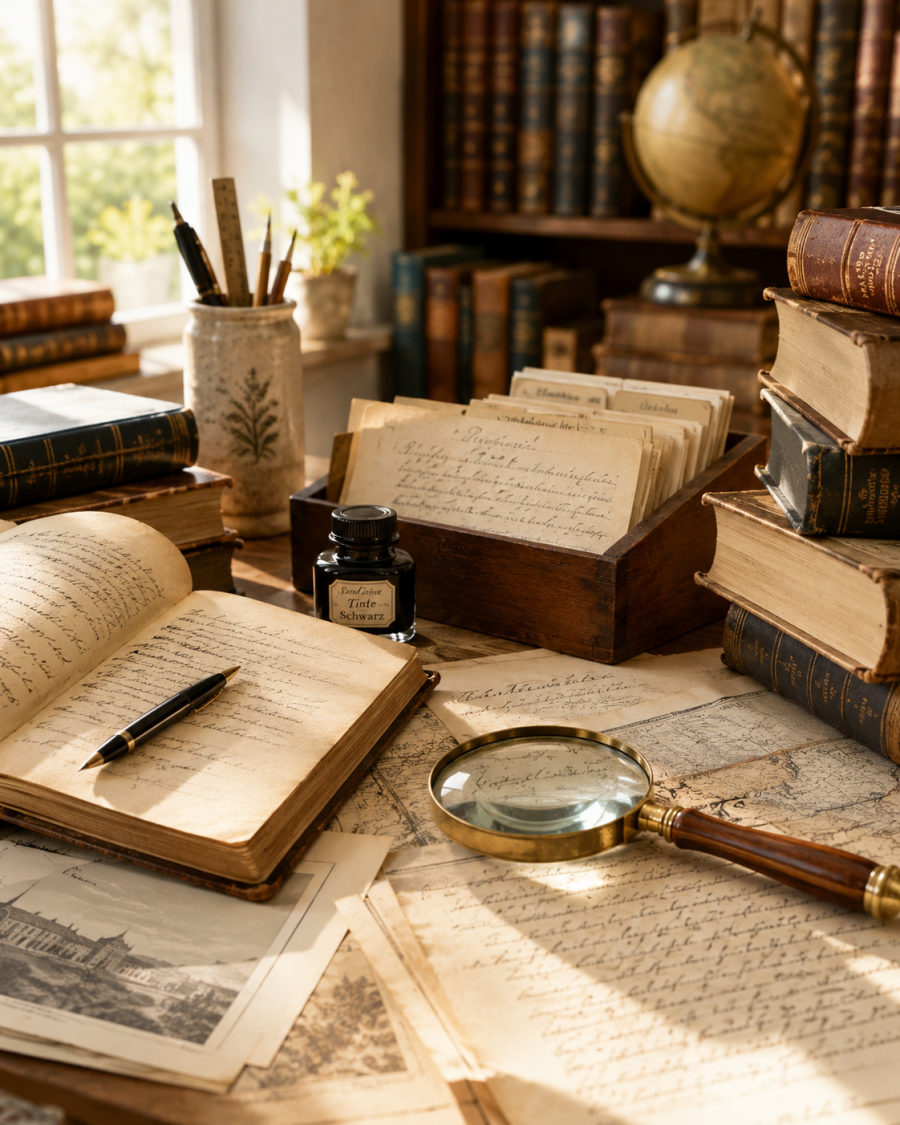
A real letter from 1909. The AI helps read the old handwriting and translates it – and also recognizes the people, the date and what the document is about.
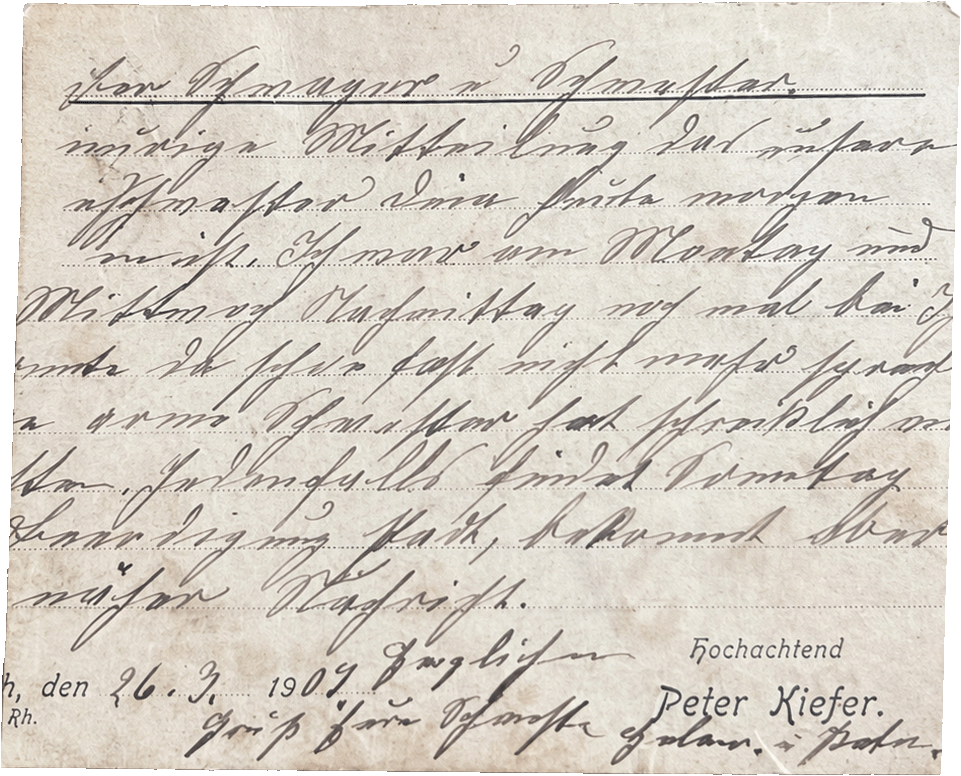
To brother-in-law and sister. Sad news: our sister Luise passed away this morning. I was with her again on Monday and Wednesday afternoon – she could hardly speak anymore. Our poor sister suffered terribly. The funeral will be held this Sunday; further details will follow. Gladbach, March 26, 1909 · Warmest regards, your sister Helene and Peter · Respectfully, Peter Kiefer.
Peter and Helene inform their brother-in-law and sister that their sister Luise passed away on March 26, 1909 after a severe illness. The funeral is announced for the coming Sunday.
The faithful transcription in the original language is included as well – useful if you want to quote the source.
And every letter lands in your own library
Store, edit and organise everything you read – in books and collections, searchable and ready to open again years later.
Why these letters are so hard to read
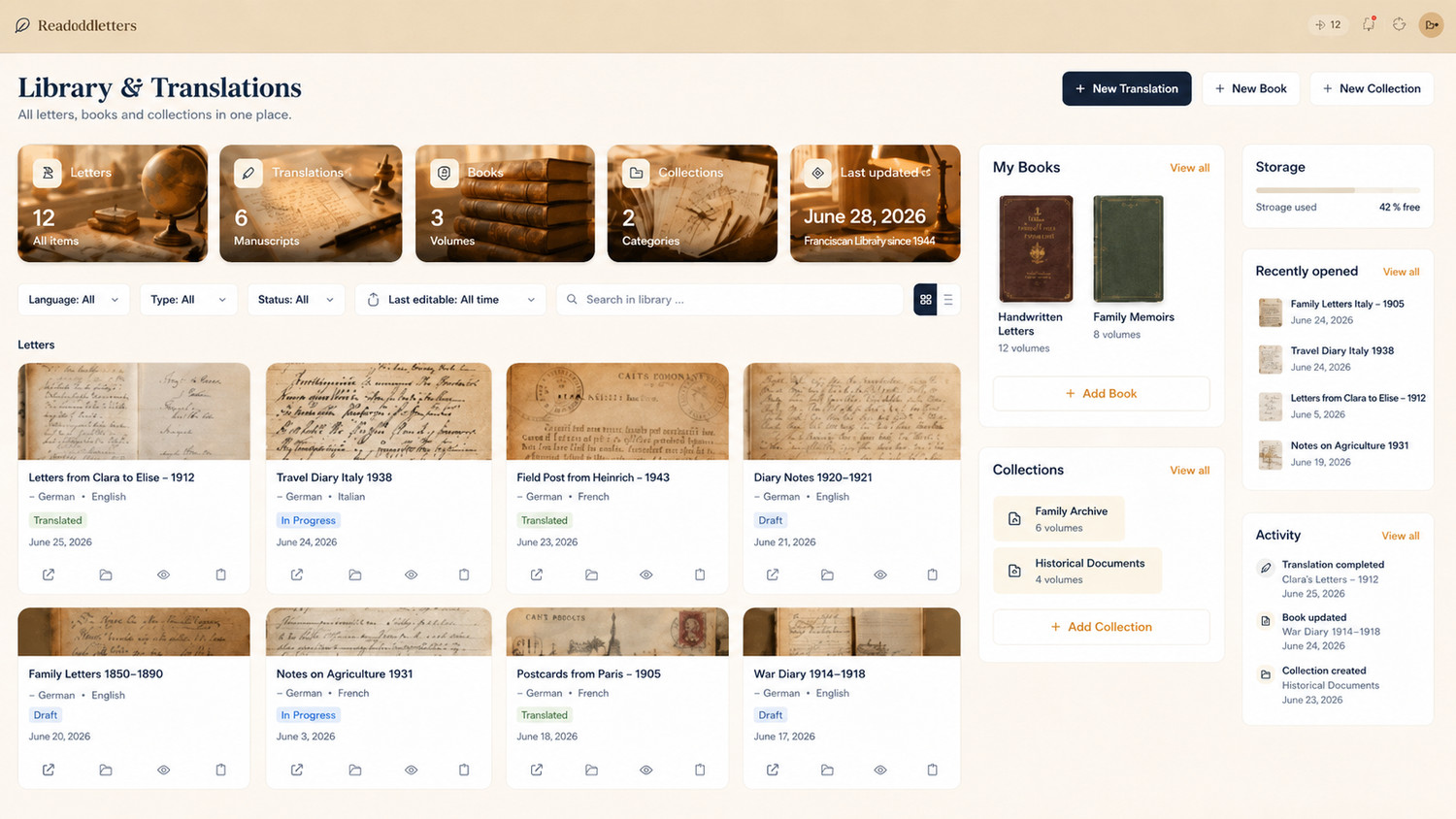
The script. Handwriting from earlier centuries uses letterforms that differ from today's – an e can look like an n, several letters share almost identical strokes, and some scripts use two different forms of s. Add faded ink, abbreviations and words that no longer exist.
The language. Most papers your ancestors brought from Europe were never written in English. So even a perfect transcription still leaves you with a text you cannot read.
A dictionary or a translation app won't help – you cannot translate what you cannot decipher in the first place. Readoldletters solves both steps at once: the AI helps decipher the handwriting and translates the text into English.
Documents you can have translated
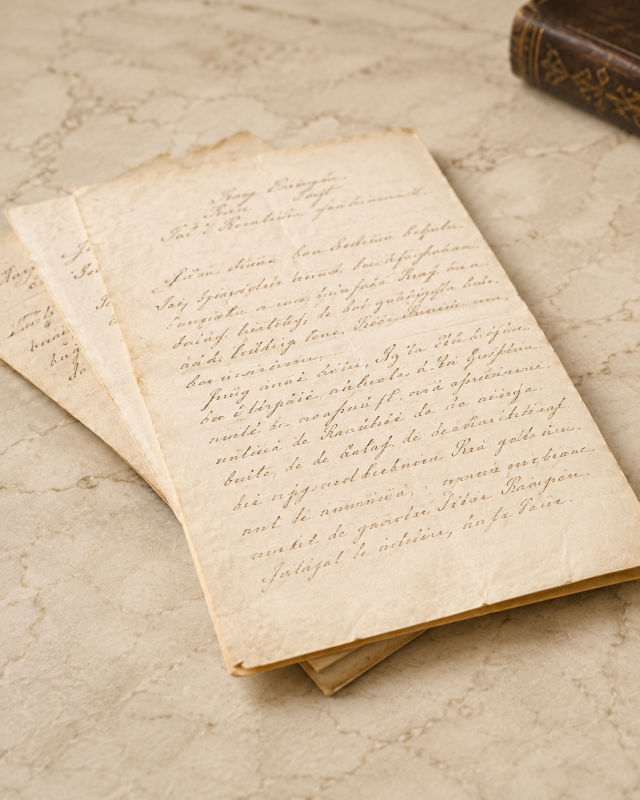
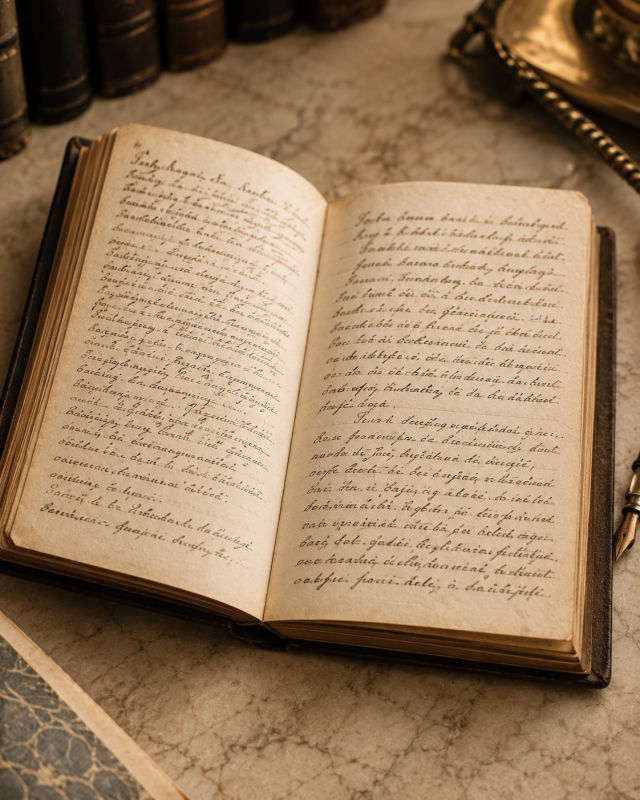
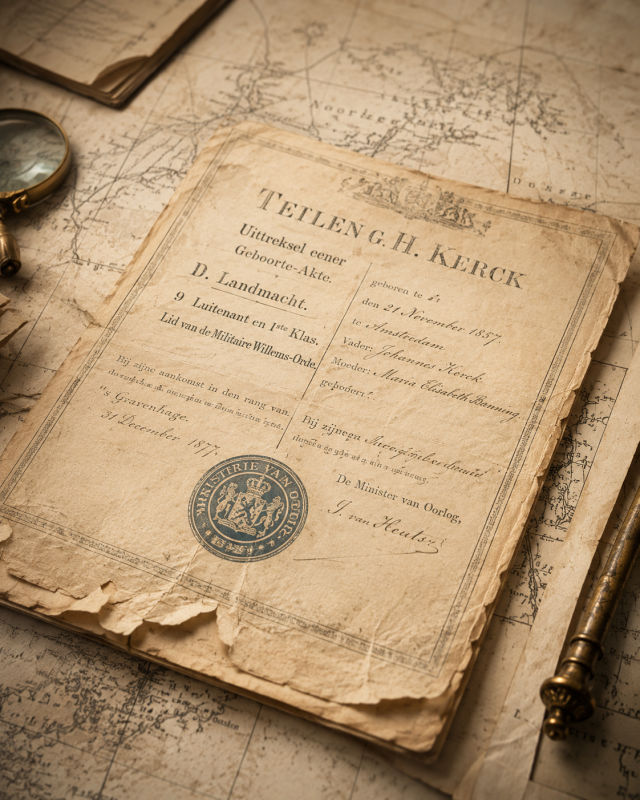
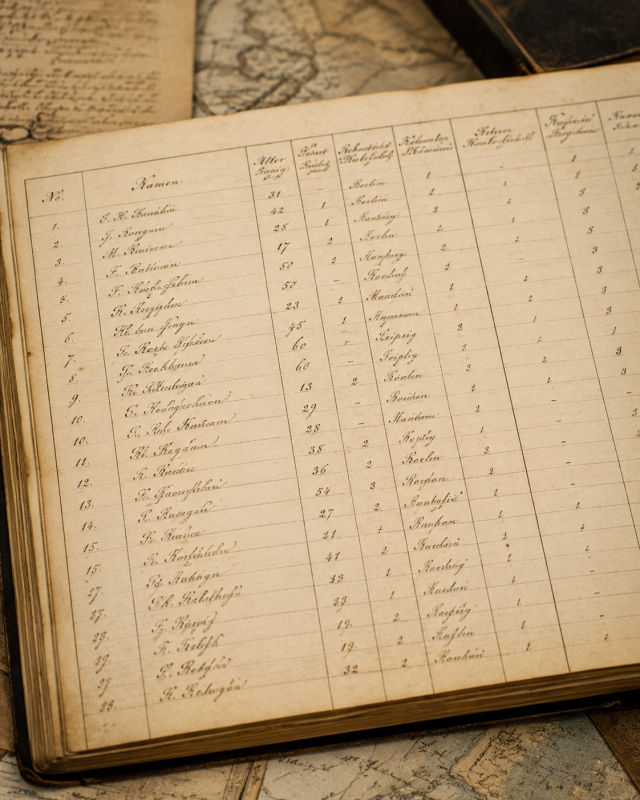
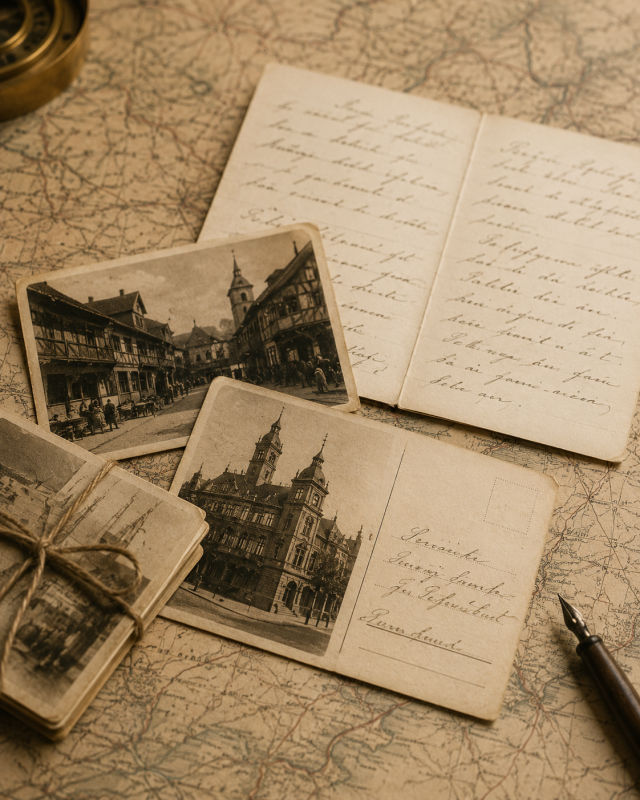
Letters & wartime mail – decipher old correspondence in historical cursive, transcribed and translated.
Diaries and handwritten memoirs from the 18th–20th century, made readable page by page.
Church records and official files for genealogy – names, dates and places recognised automatically.
Registers & tax lists captured as an editable table and exported as CSV or PDF.
Postcards, greeting cards and loose notes digitised and turned into plain English.
How it works
Scan with precision
Upload a photo or PDF – high-resolution recognition of even the finest strokes and paper details.
Transcribe with AI
The AI understands historical hands, old abbreviations and context.
Translate & review
The text is translated into English, uncertain words are highlighted and stay correctable.
Organise & export
Organise everything in books and collections and export it as a clean PDF – ready to use any time.
No payment details needed · Free account for storing & editing · Credit packs from €5.99
What the app can do
More than a transcription tool
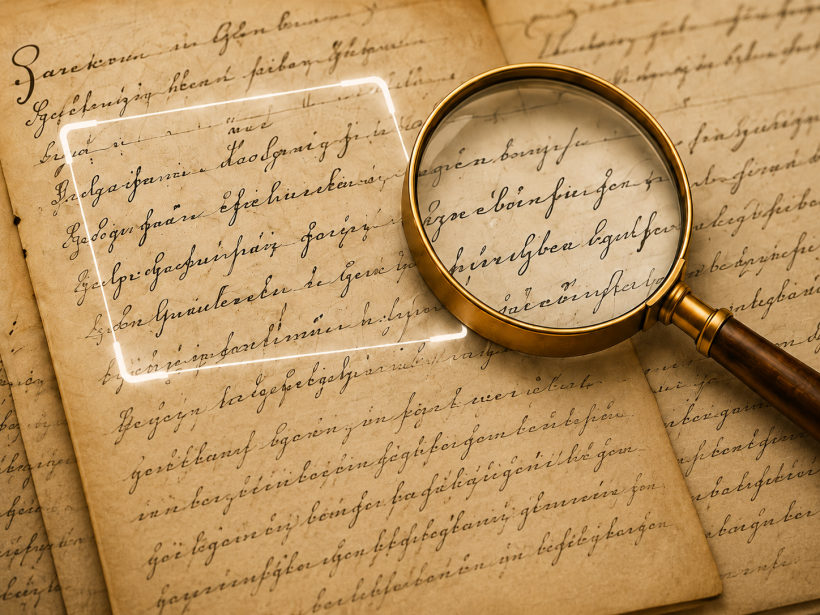
Historical handwriting of every kind
Historical cursive of many kinds and languages – from the 16th century to today, even ornate and heavily abbreviated hands are read reliably.
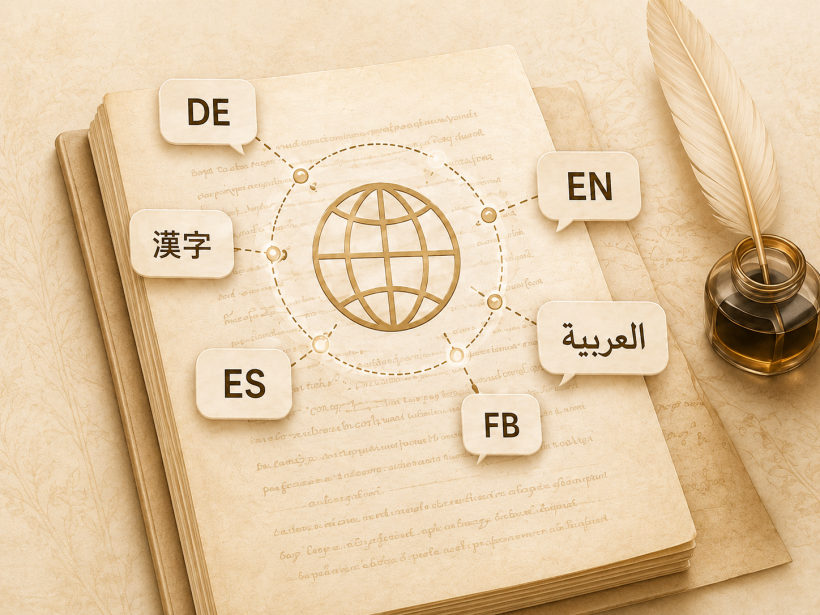
Translated into English
The transcribed text is automatically rendered into modern, readable English – or one of 15 other languages.
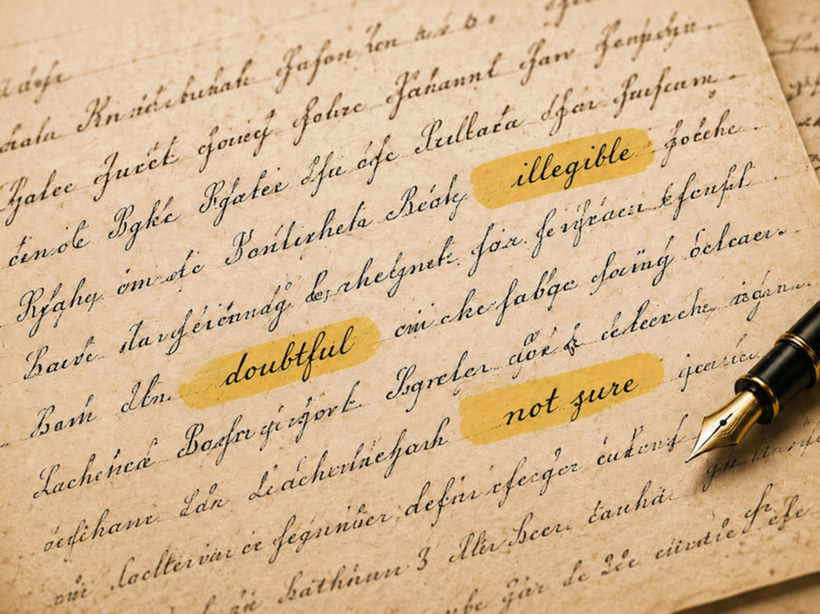
Uncertain words highlighted
Doubtful passages are marked with a reason and a suggested reading – you stay in control and correct them with one click.
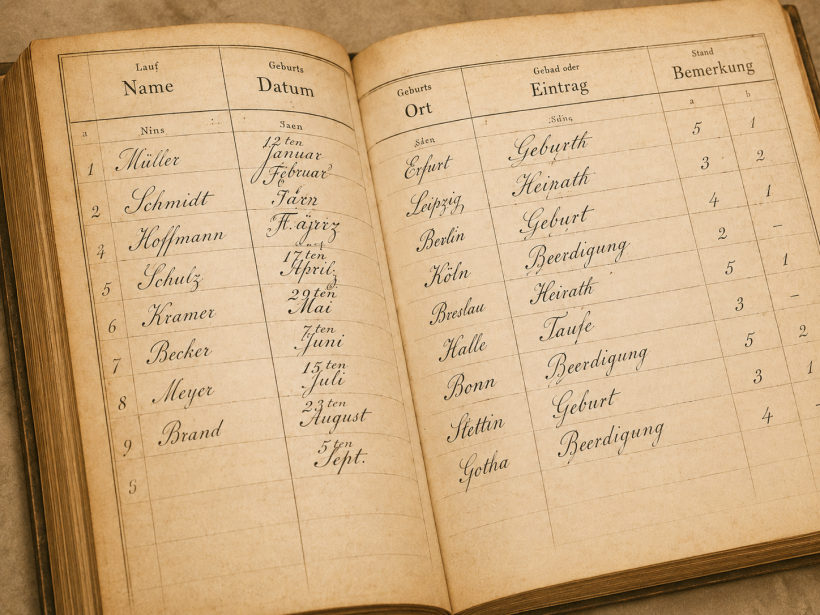
Table & register scan
Church books, court and civil registers are captured as a structured table – column by column – and exported as CSV.
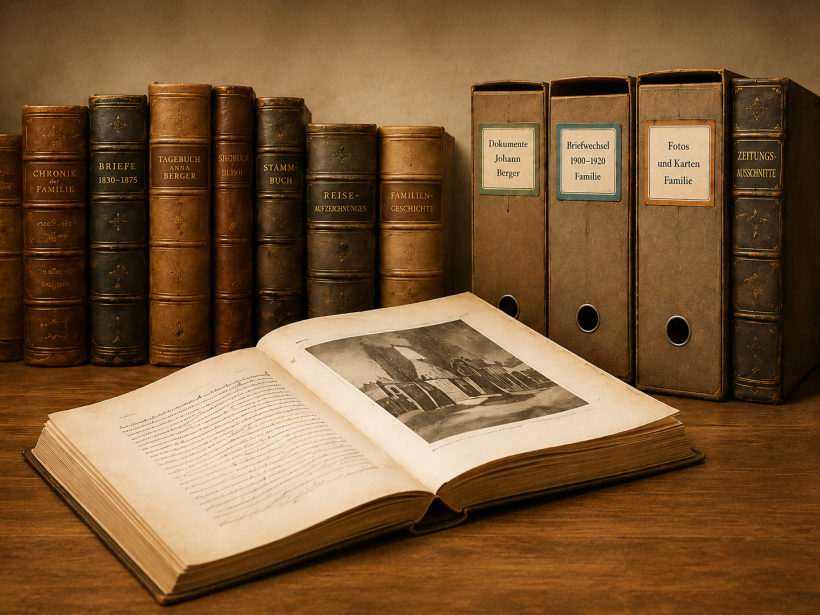
Books & collections
Organise your finds into books and collections – entire correspondences or family archives stay in order.
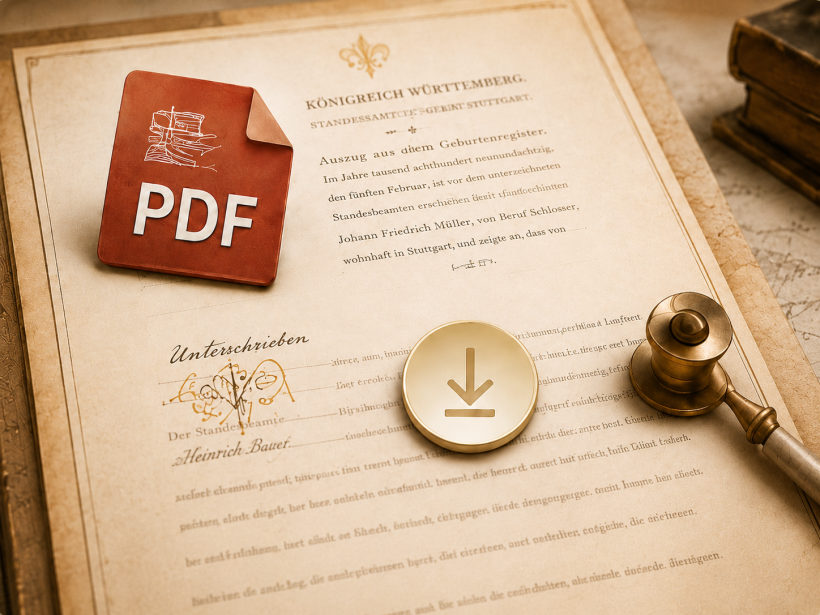
PDF export
Export the original, the transcription and the translation as a clean PDF – to share, print or archive.
Who it's for
Made for everyone who wants the past readable
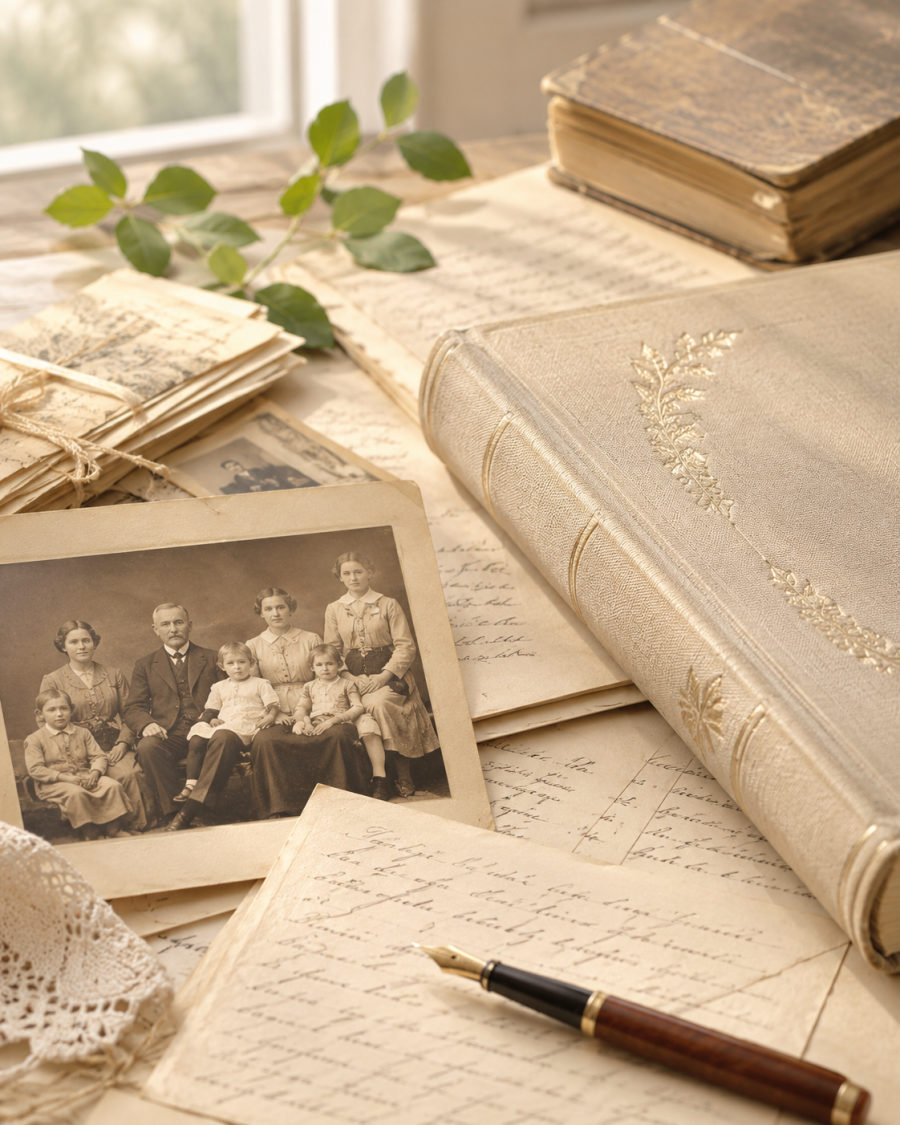
Genealogists & families
Decipher family letters, diaries and church-book entries – and finally read what your ancestors left behind.
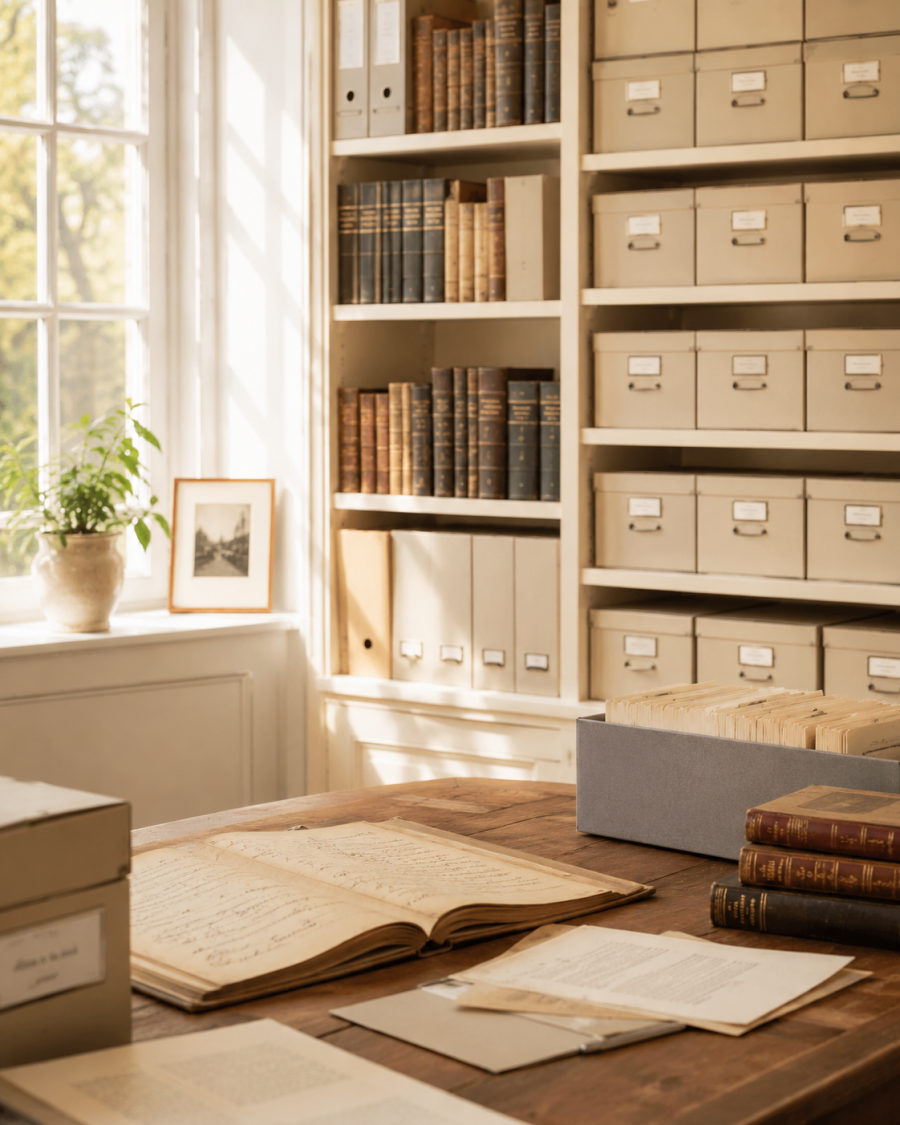
Archives & libraries
Open up large holdings faster. Register scans and structured data make collections searchable.
Historians & researchers
Save time on source work. Transcription and translation in one step – verifiable and correctable.
Create books, manage collections
Everything you transcribe stays in your own library – organised into books and collections, searchable and ready to open again years later. And for every kind of handwriting there is a matching tool:
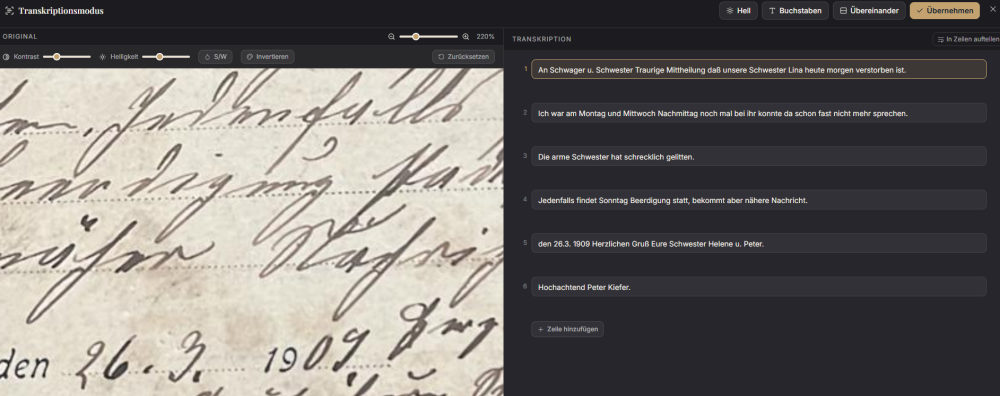
The original zoomed in beside the transcription – check it line by line.
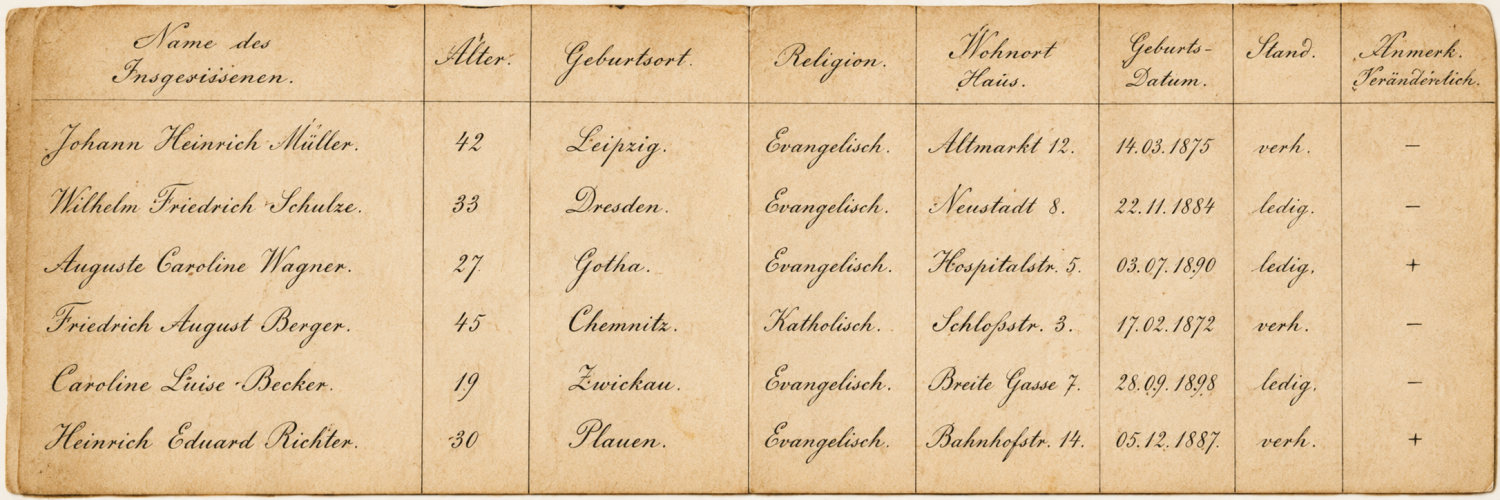
Church books & registers are captured as a table, column by column.
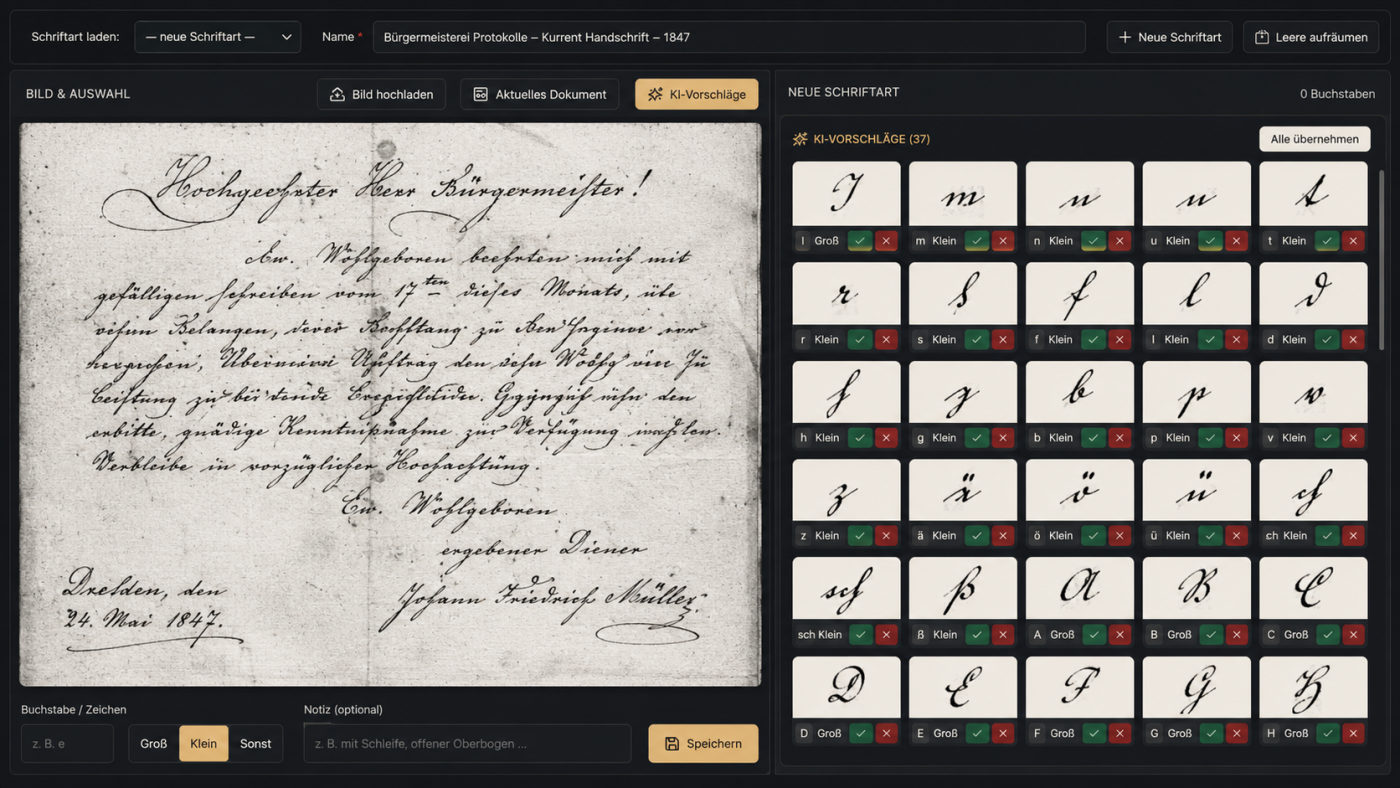
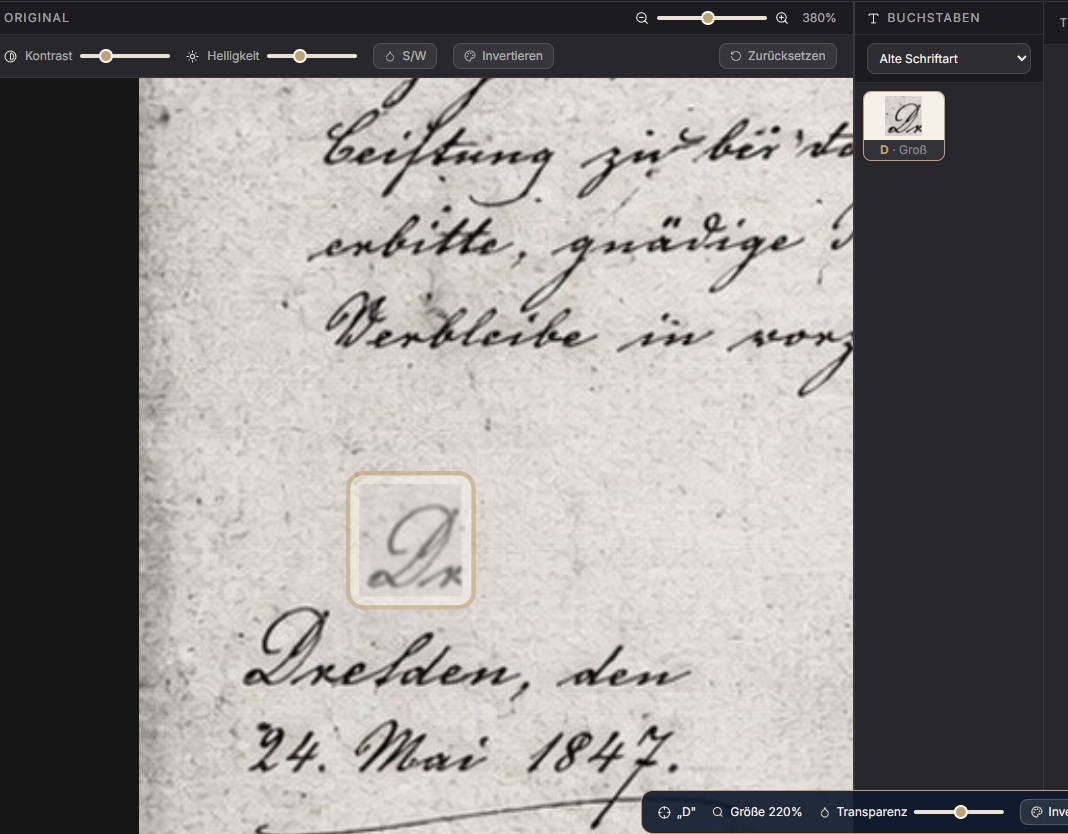
The AI cuts out individual characters – as a reference library.
From original to structured data
Before
After
| Name | Age | Birthplace | Religion | Residence | Status |
|---|---|---|---|---|---|
| Johann Heinrich Müller | 42 | Leipzig | Protestant | Altmarkt 12 | married |
| Wilhelm Friedrich Schulze | 33 | Dresden | Protestant | Neustadt 8 | single |
| Auguste Caroline Wagner | 27 | Gotha | Protestant | Hospitalstr. 5 | single |
| Friedrich August Berger | 45 | Chemnitz | Catholic | Schloßstr. 3 | married |
| Caroline Luise Becker | 19 | Zwickau | Protestant | Breite Gasse 7 | single |
Letter library
Every hand becomes
your own alphabet.
Every writer shapes their letters differently. Upload an image – the AI cuts out the individual characters and builds a personal letter library from them. When a tricky word comes up, you compare the unclear character directly with your collected letters.
Upload an image
Choose a photo or scan – or use the document you are already working on.
The AI cuts out the letters
Upper and lower case, umlauts (ä, ö, ü) and ligatures (ch, sch, ß) are detected and cut out individually – you keep or discard each suggestion.
Use it as a reading aid
The collected characters serve as a reference – saved per writer as their own typeface and reloadable at any time.
Pricing
Start right away
The free version stays usable forever – store, edit and export your documents as PDF. For scanning, choose credits or a subscription.
Free
After scanning – available even without credits
€0
- Editable transcription & translation
- Create & manage books and collections
- PDF export
- No payment details required
Subscription
For regular research
Choose your monthly scan allowance:
All features · cancel anytime
Credits
For occasional use
Buy once – as many as you need:
No subscription · credits never expire
1 credit = 1 scan · all prices in euros (EUR), incl. VAT. For archives & institutions: individual terms on request.
Questions people ask before their first letter
The document is not in English – can I still use this?
Yes – that is exactly what Readoldletters is built for. The AI transcribes the old handwriting and translates the text into English (or one of 15 other languages), so you can read what your ancestors wrote without speaking the original language.
Which handwriting styles can be read?
Historical cursive from roughly the 16th century to the mid-20th century, in many languages – including the old German hands Kurrent and Sütterlin. These older scripts use letterforms so different from modern handwriting that most people can no longer read them today.
What files can I upload?
Photos (JPG, PNG) taken with your phone or scanner, and PDF files – including multi-page PDFs. Several pages can be combined into one document.
What does it cost?
You can try two pages for free without creating an account. A free account lets you store, edit and export your documents permanently; scanning uses credit packs starting at $5.99 (€5.99 in the eurozone). You are billed in your own currency.
How accurate are the results?
That depends on the handwriting and photo quality. Uncertain words are highlighted with an explanation and a suggested reading, and every word can be corrected directly in the editor – you always keep control over the final text.
What happens to my documents?
Your documents belong to you. They are stored in your private library, are not visible to other users, and you can delete them at any time.

Find out what your ancestors wrote
Upload a page and see the result in minutes – no account, no payment details.